
Manhole Restoration with SewperCoat®: A Long-Term Solution for Aging Infrastructure
Common Problems in Deteriorated Manholes
Over time, manholes may experience:
-
Concrete corrosion caused by H₂S gas
-
Cracks, spalling, and exposed aggregate
-
Infiltration and inflow (I&I)
-
Structural weakness that compromises system safety
-
Increased maintenance and emergency repair costs
Without proper rehabilitation, these issues can escalate into system failures, environmental hazards, and costly replacements.
What Is SewperCoat® Manhole Restoration?
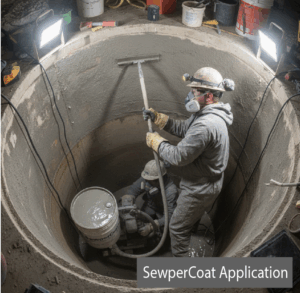
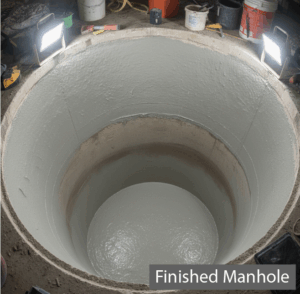
SewperCoat® is a high-performance, spray-applied epoxy coating system specifically engineered for wastewater structures. Once applied, it creates a monolithic, corrosion-resistant barrier that protects manholes from further chemical and biological attack.
This system is ideal for restoring deteriorated manholes while avoiding the disruption and expense of full replacement.
Key Benefits of SewperCoat®
-
Exceptional corrosion resistance against H₂S and aggressive sewer gases
-
Structural enhancement when applied at appropriate thickness
-
Fast application and curing, minimizing downtime
-
Seamless, joint-free lining that prevents infiltration
-
Long service life, reducing long-term maintenance costs
These advantages make SewperCoat® a reliable solution for both preventive maintenance and active rehabilitation projects.
Applications
SewperCoat® is suitable for:
-
Sanitary sewer manholes
-
Stormwater manholes
-
Lift stations and wet wells
-
Precast and cast-in-place concrete structures
It can be applied to a wide range of diameters and configurations, making it a versatile option for municipal and commercial systems.
Our Rehabilitation Process at DRC Construction
Every manhole restoration project begins with a detailed approach:
-
CCTV Inspection to assess structural condition
-
Thorough cleaning to remove debris, grease, and corrosion
-
Surface preparation to ensure optimal coating adhesion
-
Professional SewperCoat® application by trained technicians
-
Final inspection to verify quality and performance
This process ensures long-lasting results and compliance with industry standards.
Why Choose Manhole Rehabilitation Over Replacement?
Rehabilitation offers significant advantages over full replacement:
-
Lower overall project costs
-
Reduced excavation and surface disruption
-
Shorter project timelines
-
Extended service life of existing infrastructure
For many systems, rehabilitation is the most efficient and cost-effective solution.
Partner with DRC Construction
DRC Construction is committed to helping municipalities, commercial facilities, and federal client, to protect and extend the life of their wastewater infrastructure. Our expertise in inspection, cleaning, and trenchless rehabilitation allows us to deliver durable, reliable solutions tailored to each project.
📞 Contact DRC Construction today to learn more about our manhole restoration services and how SewperCoat® can help safeguard your system for years to come.